Touché Amoré
One Step Closer, Greet Death

Event Info
Brooklyn Bowl Philadelphia
1009 Canal Street
Philadelphia, Pennsylvania 19123
Doors 7pm / Show 8pm. All ages welcome. This ticket is valid for standing room only, general admission. ADA accommodations are available day of show. All support acts are subject to change without notice. Any change in showtimes, safety protocols, and other important information will be relayed to ticket-buyers via email. ALL SALES ARE FINAL
Brooklyn Bowl is now a cashless venue. As of July 8th 2024 we will no longer accept cash as a form of payment in all areas of the house. The venue has the capability to load cash onto a debit card, which you can use at the venue or anywhere that accepts Mastercard.
Artist Info
Touché Amoré
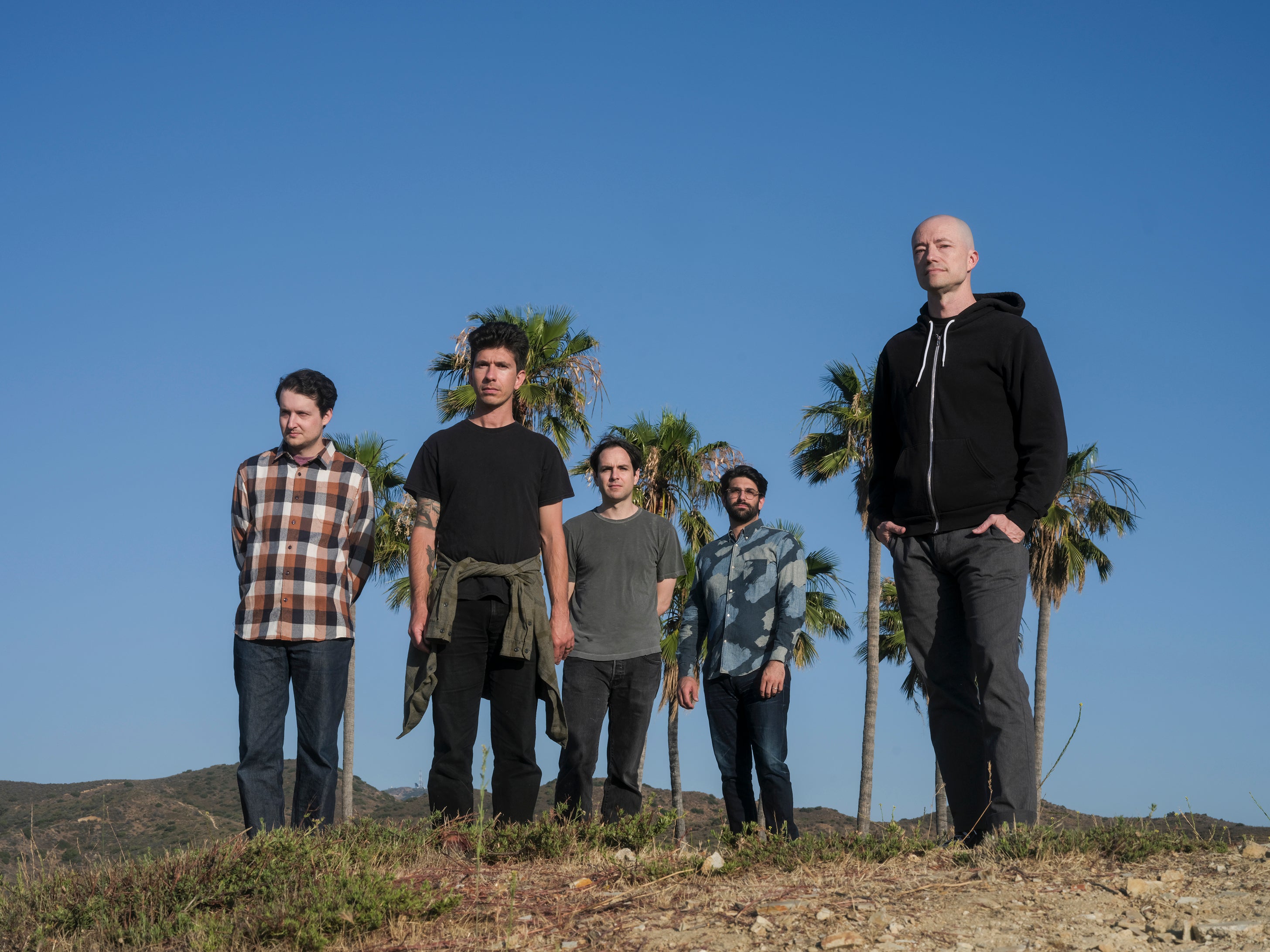
For more than a decade, L.A. phenoms Touché Amoré have been a driving force as vanguards of the contemporary hardcore scene. Over the years, and across their discography, the band has probed and navigated anxiety, isolation, illness, and grief. Now a bedrock of post-hardcore, Touché Amoré have never stopped looking forward. Their latest work, the deeply-felt Spiral in a Straight Line, continues on the trajectory of innovation, transformation, and reflection, translating lived experiences into a broadly resonant record that continues to explore new sonic territory for the band. It’s a reckoning with monumental change — an evocative result of internal and external turbulence.
The band’s second time working with renowned — and notorious, lore-ridden — producer Ross Robinson (At the Drive-In, Slipknot, Glassjaw), Spiral in a Straight Line revels in discomfort. This ongoing collaboration marks a new dimension of complexity as Touché Amoré further push the boundaries of their sound while delving further into their emotional core. A deft, dynamic creative unit at this stage in their storied career, the band wields intimacy with steady hands and exhibits new mastery over their relentlessly expressive sonics. As ever, they are in equal measure deliberate and impassioned.
An unraveling of tangled wires — ropes, threads, knots of all kinds — occurs here, in the effort of perspective otherwise not found. The spiral is interiority caught in a loop of anxiety, its straight line is the attempt to keep composure when all feels as though it is falling apart. It’s intensely personal. And yet a universal conceit: What happens when you’re trying to keep it together for appearances’ sake, even when you feel you’re coming undone at the seams.
Principal lyricist Jeremy Bolm, guitarists Nick Steinhardt and Clayton Stevens, bassist Tyler Kirby, and drummer Elliot Babin, each came to the practice space and studio with vastly different evolutions at play. In the process of crafting Spiral in a Straight Line, they melded — in the same, but different, way Touché Amoré have for their now over a decade-long stint. There was something in the air the whole crew tapped into, during the second rainiest season on record in LA. The songs flowed more freely, they delved deeper than ever. With a new level of intimacy in Steinhardt’s home practice space combined with the return to Robinson’s mining of emotion, Touché Amoré reach a tier of fervency that marks an ecstatic turn in the band’s pages.
“As I fixate on the road ahead It just winds and winds and winds and winds,” Bolm wails in the outro of the record’s lead track, “Nobodys” — whose narrator is a “character” wishing to chalk it all up to performance, who proclaims that sometimes life just doesn’t make any sense at all. It’s the first time in the band’s history that Bolm takes on these twisting lyrical and vocal traits, an apt mirroring of the album’s thematic whole.
These vocal spirals are as intentional as the visuals constructed for Spiral in a Straight Line, helmed by Steinhardt. The group’s seasoned art director, Steinhardt has been conceiving graphics for Touché Amoré’s tenure, based on Bolm’s lyrics as well as the sonic palette of each album. It’s greener this time around: a fresh start, perhaps, a space that considers the recent past and leaves it behind at the same time. And it’s in motion — each piece in turn referring to the scroll-like shape of a film reel and its unfurling. The language of film, its simultaneous flatness and depth, linear yet round, wound into itself.
On marquee track “Hal Ashby” is where these ideas converge most tightly. A nod to the director of Being There and Harold and Maude, the song is inspired by Ashby’s misunderstood characters; the tragedy of miscommunication, the tricks you play on yourself to convince you you’re right when, maybe, there’s some big thing you’re missing. A “rose-tinted view,” a “fools’ errand,” a “red herring.” The song itself is romantic, sonically and lyrically, in the way it feels to see things in a certain light, and then be course corrected — as Bolm sings — recalibrated by a force out of your control.
What it takes to change is often not what you saw in your toolbelt. Sometimes, suddenly, everything is unfamiliar. A longtime favorite song of Bolm’s was following him, again — Sebadoh’s “Brand New Love.” It’s a song about finding love in an unexpected place. And Bolm found that the chorus of this Sebadoh song from 1990 fit perfectly over the outro of a song he was writing, which became “Subversion.” Bolm, in his words, “understood the brazen request” and asked Lou Barlow if he might sing over it — and he did. The languid, melancholic song questions progress, the very concept of past and future, all while listening to Barlow’s song playing as Bolm touches down in Adelaide. And then there’s Barlow on the outro, his words of new love complicating it all.
Julien Baker, now based in LA, joined the band in the studio for the first time, after two previous features. Baker’s voice, gentle as a companion to Bolm’s, sings of catching fire and burning brighter, on album closer “Goodbye For Now.” The two harmonize — about trying to “Find new ways to not fall away,” self-forgiveness, washing away of guilt.
“Another day repeats,” goes “Mezzanine,” Spiral in a Straight Line’s central and most pummeling track. Here, everything swirls up and burns out at once, a thesis on what it means to try to survive the normalcy and strangeness of entering a life that is both new and not new. “A tire fire happening internally,” Bolm howls. Each thread of the record coils up in this idea: going through routines but in thin air; keeping up through raindrops; multiplying demons and fence-sitting; dead of new days; a spiral in a straight line; will I get used to this?
Linear and circular at the same time, Spiral in a Straight Line is concerned with the fear and trepidation that accompanies shifts out of one’s control. The anxiety of a circle broken: how you figure your way out.
One Step Closer
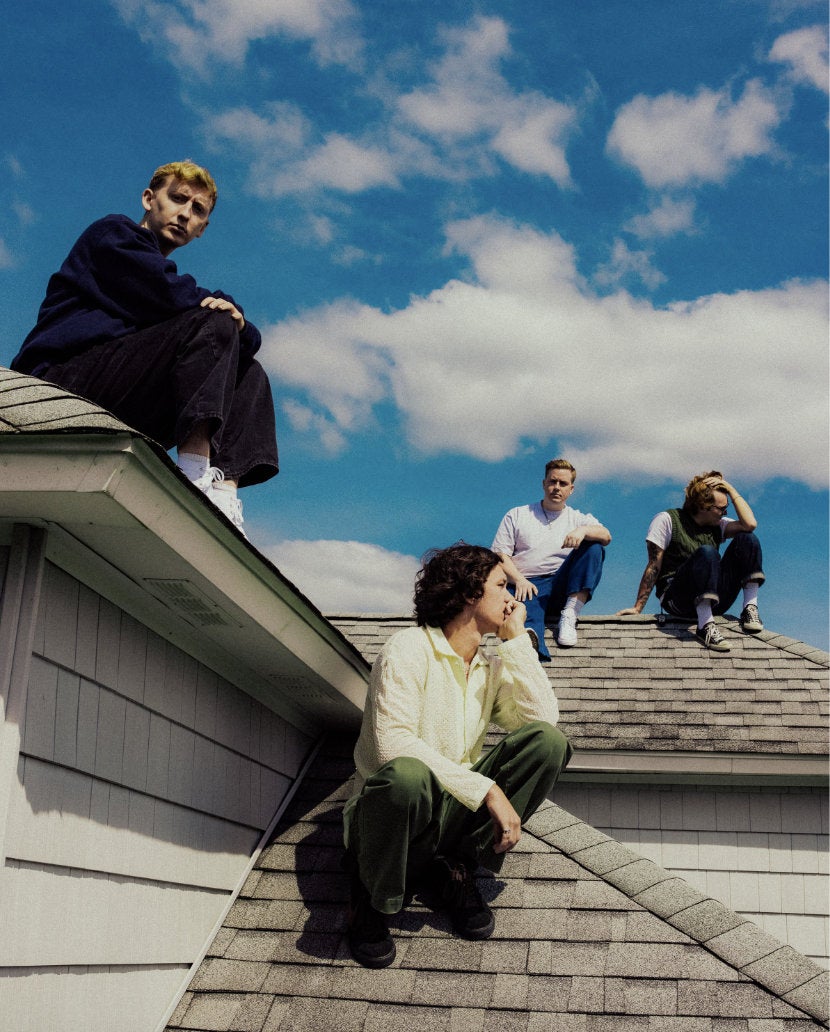
One Step Closer has always believed that hardcore is limitless. On All You Embrace, the band puts that theory into practice. Every release from the Wilkes-Barre, Pennsylvania band has seen them exploring the sonic overlaps of hardcore, emo, and ‘90s alternative rock without an iota of self-consciousness, or pretension, creeping into the mix. The band’s latest is a collection of 11 songs that show One Step Closer reaching for something deeply honest and, as always, authentic.
With founding members Ryan Savitski (vocals) and Ross Thompson (guitar) at the helm of One Step Closer, alongside newest addition Colman O’Brien (guitar), the three were able to fearlessly guide One Step Closer in new directions. Taken in full, All You Embrace is the sound of One Step Closer honoring their past while building a future that looks more open, more creative, and more expansive than anything the band has done before.
Greet Death

True to the band’s name, death creeps into nearly all of Greet Death’s songs. And yet, through this ever-present certainty, the band finds the absolute core of what it means to be alive.
Since 2011, elementary school friends Logan Gaval and Harper Boyhtari have been writing songs full of big ideas and everyday details. Their music, loud and full of melodic sensibility, draws from shoegaze, doomgaze, and a little-bit-of-everything-gaze, creating an emotionally maximalist palette. Writing separately but playing together (think of them as small-town Michigan’s Tom DeLonge and Mark Hoppus), they’ve been drawing in a devoted crowd ever since their unexpectedly successful debut Dixieland in 2017, followed by their next-level opus New Hell in 2019. You’d be hard-pressed to find albums with such heart: ones flooded both with full-bloom feelings and the dumb stories we tell ourselves in order to get through the day.
Returning six years later with Die In Love, their third and best album, Greet Death faces the great human problem—that we must go on living despite knowing we’re going to die, and loving despite knowing we’re going to lose it all—with great sensitivity, humor, and flourish. With this album, Greet Death has found a way to anthemize our suffering, to turn it into one great, big, beautiful singalong: we’re all gonna die, woo!
“Everybody struggles in a roundabout way,” goes the album’s opening lyric. No longer just honing in on their own pain, the band is now using suffering as a jumping-off point, a way to connect, and ultimately love one another. “Emptiness is everywhere, so hold each other close,” Harper sings later on, another of the album’s key lyrics. After years of performing their songs live, the band has seen firsthand how keenly their audience connects to their music. “So I wanted to try to write something less fatalistic, because I feel some kind of responsibility to help,” says Logan.
Prior to recording, Logan had been listening to a lot of The Beatles and Paul McCartney’s solo work, “because I was trying to figure out how to write a song that wasn’t just depressing,” he says. He and Harper had been talking for a while about the direction of Die In Love; why not a bunch of love songs?" They tried to do just that, but of course, death came creeping in as usual. Die In Love speaks to the most tragic and beautiful scenario possible: dying beside the person you’ve spent your whole life loving. Tragic, because we have to die. Beautiful, because we might be able to do it together.
They recorded the album in Harper’s parents’ basement in Davisburg, Michigan, the place where she and Logan spent much of their preteen and adolescent years. They cut their teeth in that basement, learning how to be a band around the time School of Rock came out and inspired in aughts kids a new possible life path. Logan and Harper covered Metallica and Blink-182 and wrote songs about batteries and frozen yogurt. Returning to that basement well over a decade later to record their third album felt like the back-to-basics moment they needed, something that would take the pressure off after years away from the studio.
Ever since they were kids, music has been the primary form of communication for Logan and Harper. Between them, they’re able to mine the absolute essence of everything both through big picture ideas and small vignettes of life. In Logan’s songs we hear the former, and in Harper’s the latter. While Logan takes big, beautiful hits at existence, Harper focuses on small shards. On her songs — ‘Country Girl’, ‘Emptiness Is Everywhere’ and ‘Love Me When You Leave’ — she takes us through DVD viewings of Halloween, buckets at KFC and family gatherings soundtracked by ‘Hotel California,’ “that bullshit Eagles song”. Then, she’ll deliver a Loganism in quick succession, one absolutely devastating lyric that blitzes it all to pieces: “family is everywhere ‘til it’s not there.”
Die In Love asks how we can possibly cope with all the inevitable loss we’ll experience in this life. How on Earth can anyone survive it? The point is that none of us do. So, enjoy the bullshit Eagles songs while they last; the cheap beer, the disappointing New Year's Eve celebrations, the family members and the lovers who choose to stay a little while.
“Pain and loss. Everyone feels it, it’s a very human thing,” says Logan. “At the end of the day, we’re lucky to lose people we care about,” says Logan.
Just Announced