Soccer Mommy & Snail Mail: The S&M Tour
Scarlet Rae

Event Info
Brooklyn Bowl Nashville
925 3rd Avenue North
Nashville, Tennessee 37201
This event is 18+, unless accompanied by a parent or legal guardian. A physical, valid government-issued photo ID is required for entry. No refunds will be issued for failure to produce proper identification. Want to have the total VIP experience? Upgrade your ticket today by reserving a bowling lane or VIP Box by visiting the VIP Upgrade tab on our website.
Artist Info
Soccer Mommy
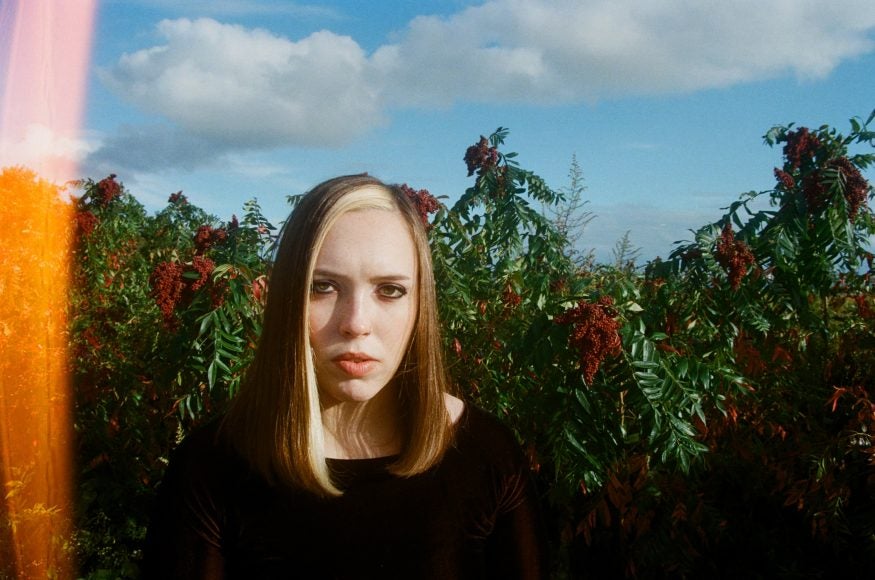
Sophie Allison has always written candidly about her life, making Soccer Mommy one of indie rock’s most interesting and beloved artists of the last decade. Allison has used Soccer Mommy’s songs as a vehicle to sort through the thoughts and encounters that inevitably come with the reality of growing up. After all, Soccer Mommy began as a bedroom-to-Bandcamp exercise with teenage Allison posting her plaintive songs as demos. Over the years, though, she has often enhanced that sound, using the endless production possibilities, newly at her fingertips, to outstrip singer-songwriter stereotypes. The records would start with songwriting’s kernels of truth, and she would then imagine all the unexpected shapes they could take. Every Soccer Mommy record has felt like a surprise.
On Soccer Mommy’s fourth album, the tender but resolute Evergreen, Allison is again writing about her life. But that life’s different these days: Since making her previous album, 2022’s Sometimes, Forever, Allison experienced a profound and also very personal loss. New songs emerged from that change, unflinching and sometimes even funny reflections on what she was feeling. (Speaking of funny, this is a Soccer Mommy album, so there’s an ode to Allison’s purple-haired wife in the game Stardew Valley, too.) These songs were, once again, Allison’s way to sort through life, to ground herself. She wanted them to sound that way, too, to feel as true to the demos—raw and relatable, unvarnished and honest—as possible. The songwriting would again lead where the production would follow. Nothing overindulgent, everything real.
Snail Mail
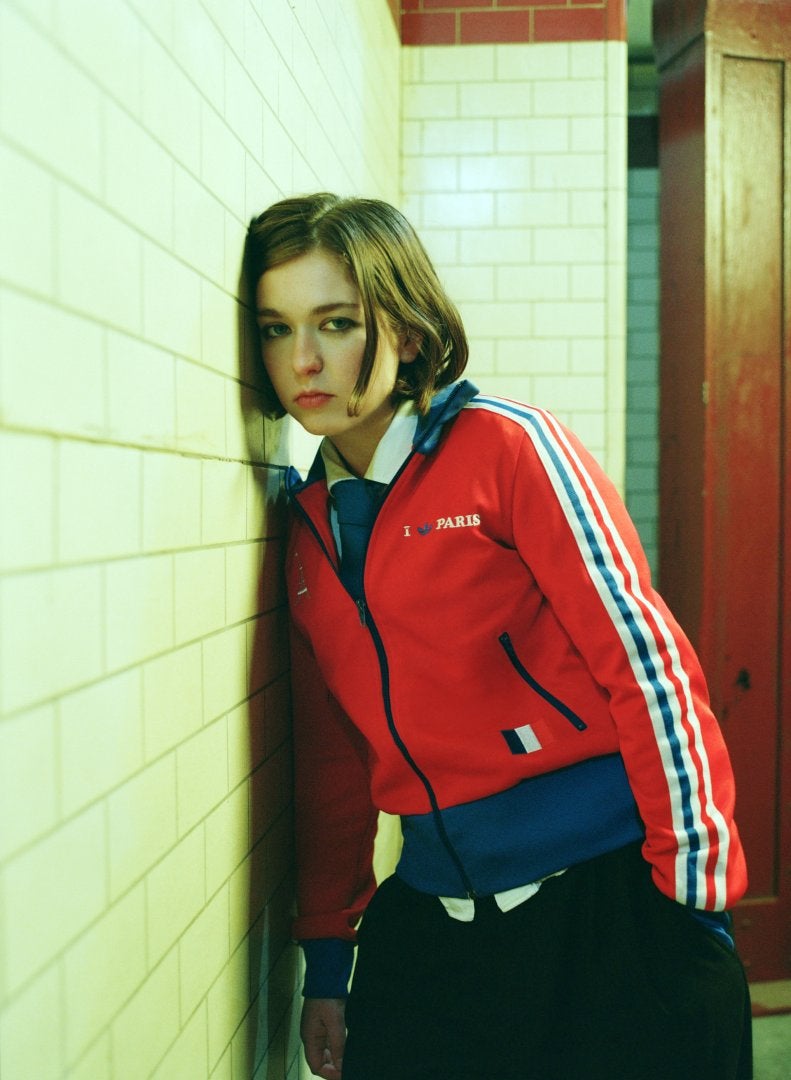
On Ricochet, her third album as Snail Mail, Lindsey Jordan returns to assert herself as a generational songwriter, clear-eyed and honest as ever. Time has passed, but she remains a sensitive soul, and here her incisive introspection is tethered to newly expansive and hypnotic melodies and ornate string arrangements. While writing Ricochet, Jordan found herself fixating on concerns she’d previously pushed out of her mind, namely death and what happens after. These 11 songs are colored by the anxiety of watching life slip through your fingers, as well as the vulnerability of loving deeply rather than frenetically. Ultimately, Ricochet is an album about realizing—and accepting—that the world still turns no matter what is going on in your tiny life.
Ricochet is the first Snail Mail album in five years, and a lot has happened in the interim. Before touring 2021’s Valentine around the world, Jordan had surgery for vocal polyps. She underwent intensive speech therapy and emerged as a more confident vocalist—on Ricochet, Jordan wields newfound control over her voice, ironically enough for an album about uncertainty. She made her acting debut in Jane Schoenbrun’s indie horror I Saw the TV Glow, playing a Buffy-esque heroine with psychic powers. She moved out of New York, floated around for a bit, and landed in the area around Greensboro, North Carolina. She’s 26 and has a fluffy white
puffball of a dog, whom she holds up to the night sky so she can see the stars.
All the while, Jordan was working on new music. She tried to write quickly— “which obviously didn’t work” —but with intention, aiming not to leave any material on the cutting room floor. “I've never done this before, but I wrote all of the instrumentals and vocal melodies on the piano or guitar, and then I filled in the lyrics all at once over a year,” Jordan says. “It takes me a lot more time and consideration to make great melodies than it does trying to connect things lyrically, so I gave myself more time to do the one.”
When it came time to record the songs bouncing around in her head, Jordan turned to a friend, Aron Kobayashi Ritch, the bassist and producer of the fuzzy indie rock band Momma. In winter 2025, they made Ricochet at North Carolina’s Fidelitorium Recordings, owned by R.E.M. producer Mitch Easter, and the Nightfly and Studio G in Brooklyn. Jordan describes the process as refreshing, trusting, and comfortable. “I felt like an equal voice,” she says. “He was as interested in my decisions as I was in his.”
Sonically, Ricochet sounds like the natural next step in Snail Mail’s small but mighty discography, building on the poised guitar parts of her 2018 Matador debut, Lush, andValentine’s raw rock passion. Ricochet channels the Smashing Pumpkins at their sunniest and Radiohead at their most Britpop, with notes of Catherine Wheel shoegaze, Ivy power pop, and Sunny Day Real Estate emo. These are welcoming and vibrant tones of the ambitious ’90s alt-rock variety, embellished with unusual chords and curious textures that tickle the ear. (The most immediate and obvious descriptor is, ahem, lush.)
Jordan’s early music largely dealt with matters of the heart, a territory that she tried to step beyond on Ricochet. “Misery feels safe to write about because I am good at it,” she says, “but I’m not bathing in my own agony anymore.” To feel the pain of everything and then nothing is a lonesome contradiction. Ricochet is a record about being caught in this whirlpool, but Jordan’smusic has never been so transcendent. The luminous opener, “Tractor Beam,” is driven by jangly guitars, but is ultimately about dissociation and “feeling othered while acknowledging that you’re spending a lot of your time and energy figuring out how to float away.”
While writing Ricochet, Jordan found herself drawn to art that explores the concept of life itself. The questions of artistic worth, ego, alienation, self-destruction, and failure posed by Charlie Kaufman’s 2008 film Synecdoche, New York cast a long-lasting existential shadow. “Nowhere” is informed by Laura Gilpin’s 1977 poem “The Two-Headed Calf,” about a young animal whose congenital condition allows it to see twice as many stars (the gentle stuff just kills her). On “My Maker,” she imagines flying a plane to heaven and overstaying her welcome at the airport bar. “Another year gone by,” she laments atop swirling guitars and spaced-out sprawl. “What if nothing matters?” “Oh, bouncer in the sky,” she wearily pleads on another song. “Let me in, I’m scared to die.”
Ricochet’s interiority reminds Jordan of Lush and other early music written in her Marylandchildhood bedroom.“I was writing those songs for so long, my whole life,” she says. “It was my diary.” On the grunge-gaze song “Dead End,” she mourns the simplicity of a suburban adolescence, of parking in a cul-de-sac and smoking with friends.
“I’ve aged out of thinking that you'll have everybody forever. Many of these songs are about friendships, friends that I’m sad about,” Jordan says,“But I'm also talking to myself.” “Looks like you made it/Somebody would be so proud,” she sneers on “Hell.” “But you isolated/Alienate your friends/‘Cus they’re just a means to an end.”
“Sometimes it’s devastating to be close with people. You’re busy during a birthday party. Then it happens again,” Jordan says. “All of a sudden, you haven't talked to somebody you care about in years. You wake up one day and realize you’ve put yourself in a snowglobe, and it’s cold and weird and plasticy.”
To this end, emotional detachment can be self-imposed and involuntary, a protective impulse and a clinical blunting. “Numb myself out/What else should we do?,” Jordan sings on “Nowhere.” “You covered me all in kisses/I said I couldn’t feel it, but I wanted to.” Slipping into the abyss can become a comforting guilty pleasure. “Fireworks going off from above/Lit up the sky like lightning bugs/Felt so alive then, I can’t explain,” she sings on “Cruise.” “Couldn’t wait to get home and hide my face/Couldn’t wait to get home and slip away.”
Ricochet’s cover is the first not to feature Jordan’s face. Instead, a distressed deep blue expanse is filled by a spiral shell. A spiral moves in dual, opposing directions. Inward winding suggests contraction to the point of disappearance, while outward motion implies the promise of infinity. Distance and time may lead us away from the epicenter, and growth may be uneven, in fits and starts, and maybe a few steps backwards. It’s easy to get tangled up in emotions along the way, but every rotation offers the chance for pattern recognition, for perspective, for the realization that you do it to yourself, that’s what really hurts.
Scarlet Rae
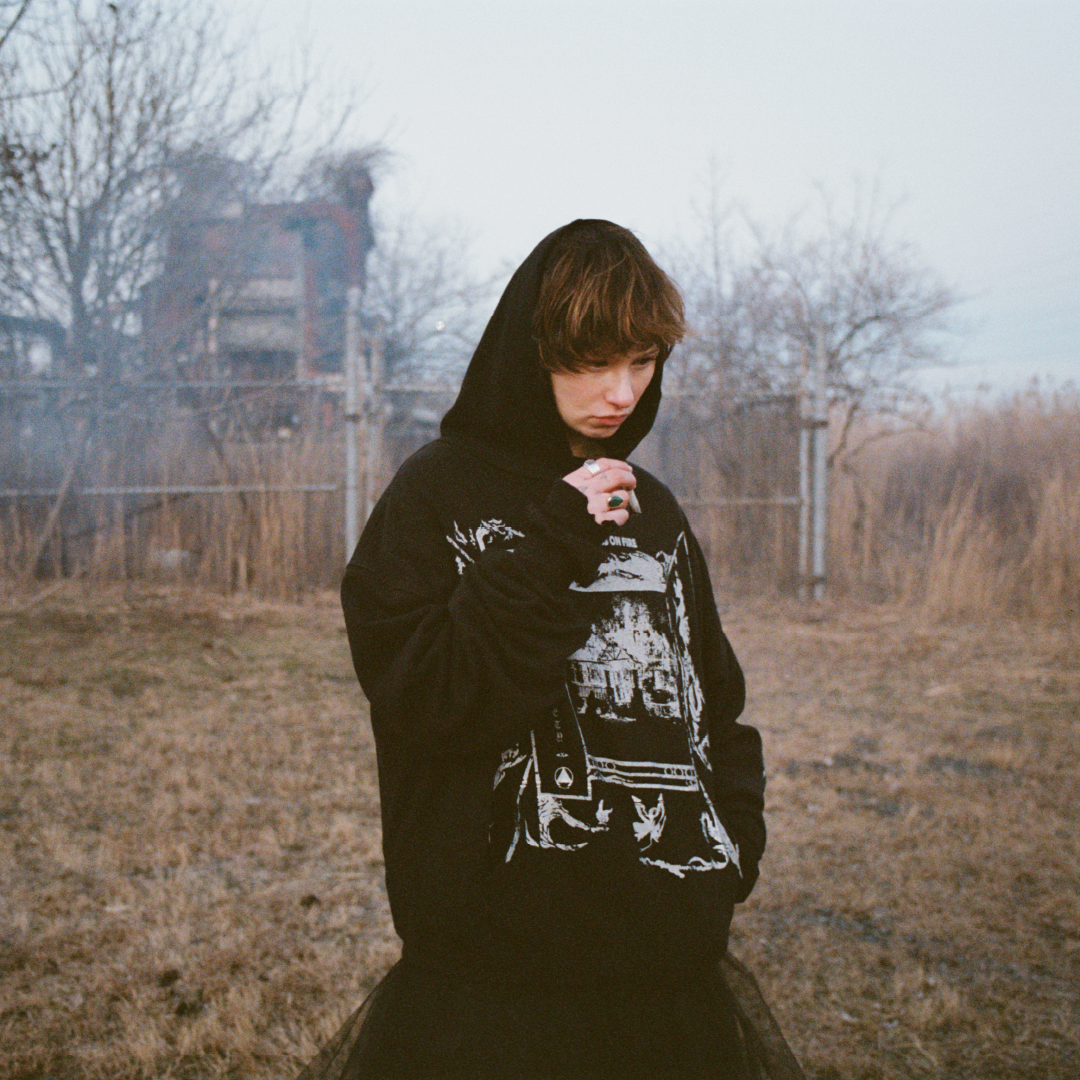
"Scarlet Rae — a Los Angeles-born, New York City-based artist — started to unveil solo tracks in 2020. She quickly honed a formula that blends understated acoustic instrumentation with shoegaze gloom and whispery, effect-shrouded vocals.
No Heavy Goodbyes — Rae’s latest EP for Bayonet Records — stays true to her blueprint, but dials in craggier textures and sharpens storytelling. When it came time to formalize the body of work, Rae fleshed out the songs as homespun demos in her Brooklyn apartment. She polished takes at sessions with producer Jordan Lawlor (M83, Oberhofer) in Los Angeles. Rae played the majority of the parts on No Heavy Goodbyes herself, citing Placebo as a source of inspiration.
In December of 2025, a clip of her playing a new song, “Best Waitress” went viral on instagram, leading her to quickly release a fully formed version of the track, “Best Waitress (v1)” early in 2026 to immense acclaim and excitement. Rae’s music is a vulnerable tremor, and she is unafraid to be painfully articulate—dusting raw themes in mesmerizing, spectral sonics."
Just Announced